Pharmaceutical manufacturers and drug wholesalers were assessing the impact of a powerful earthquake that struck Kumamoto Prefecture in southwestern Japan on July 28, confirming employee safety and checking for damage to facilities as aftershocks continued.
The magnitude 7.1 temblor struck at around 4:27 p.m., registering the maximum seismic intensity of 7 on Japan’s scale.
Japan’s four major drug wholesalers — Alfresa Holdings, Medipal Holdings, Suzuken and Toho Holdings — along with Kyushu-based Forest Holdings, began gathering information immediately after the quake. As of around 6:30 p.m., none had identified any significant damage to personnel or facilities that would prevent business operations.
Alfresa said a temporary power outage affected one of its group facilities but power was restored shortly afterward. Medipal also reported a power outage at a group facility. At Toho’s TBC Kyushu distribution center in Arao, some products fell from shelves, but the company said it would proceed with shipments after inspecting the affected items.
The earthquake also forced the closure of sections of expressways across the broader Kyushu region — the Kyushu Expressway, Minamikyushu Expressway and Miyazaki Expressway. With the extent of damage to transportation infrastructure still unclear and aftershocks expected, companies continued to monitor the situation closely to help ensure stable drug supplies while prioritizing the safety of employees and their families.
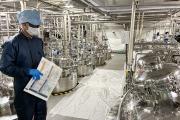
The city of Kumamoto is home to the headquarters of KM Biologics. The vaccine and blood product manufacturer said it was still gathering information on employee safety and the operational status of its manufacturing facilities. Sanwa Kagaku Kenkyusho, which operates a plant in Uto, Kumamoto Prefecture, likewise said it was working to confirm the situation.
JPMA Eyes Disaster Response Headquarters
The Japan Pharmaceutical Manufacturers Association (JPMA) said it plans to respond in accordance with its disaster manual, which outlines procedures for providing pharmaceuticals to affected areas and includes a list of medicines needed during disasters. The association told Jiho that it would establish a disaster response headquarters if requested by the Ministry of Health, Labor and Welfare.
The manual was developed in the wake of the 2011 Great East Japan Earthquake. If the ministry determines that medicines need to be supplied to affected areas, the response headquarters would prepare a list of products to be provided based on a predefined list of medicines for disaster response and would request cooperation from member companies.
Takeshi Annaka, director of the Policy Planning Division for Pharmaceutical Industry Promotion and Medical Information Management at the MHLW’s Health Policy Bureau, told Jiho that as of 5:30 p.m. the ministry had received no reports of damage from pharmaceutical companies or wholesalers.
“Given the scale of the earthquake, we are gathering information with a heightened sense of urgency,” he said.
Editor’s Note: This story reflects information available as of 7:30 p.m. on July 28.